CR-1 & IR-1 Spouse Visa from Vietnam
Updated 2026-05-29 · General information, not legal advice.
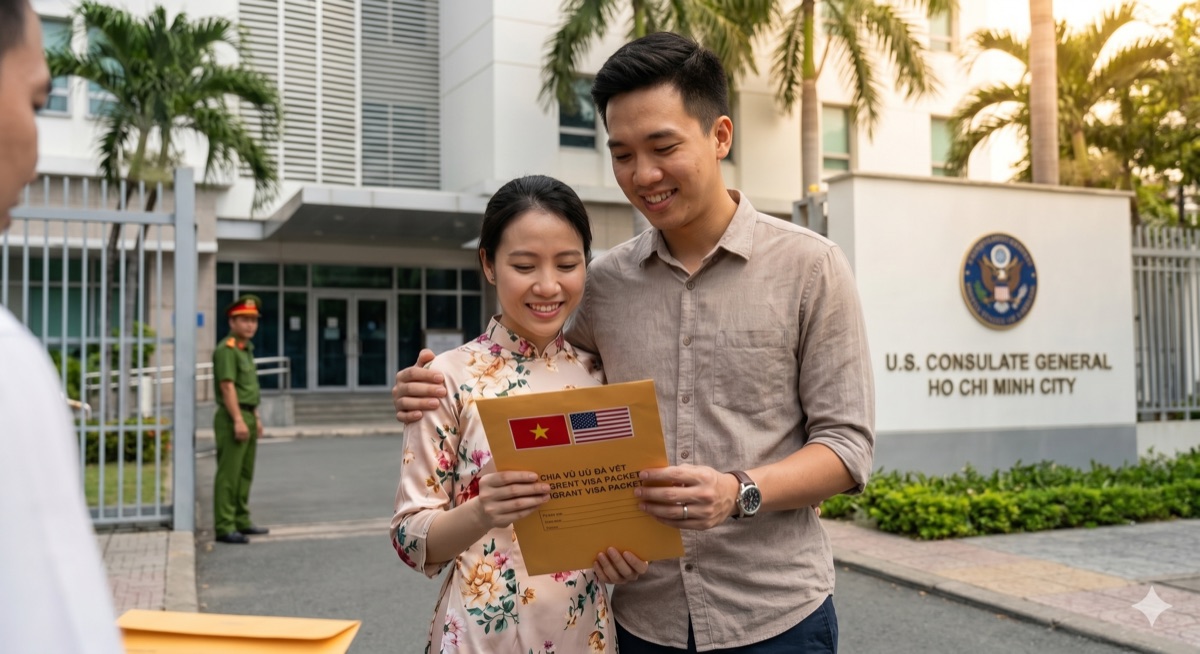
The CR-1 and IR-1 are immigrant visas for the spouse of a US citizen (a similar process applies for spouses of green-card holders under category F2A). Your spouse enters the US as a permanent resident and can live and work immediately.
CR-1 vs. IR-1 — What's the Difference?
- CR-1 (Conditional Resident): married less than 2 years when your spouse is admitted. They get a 2-year conditional green card.
- IR-1 (Immediate Relative): married 2 years or more at admission. They get a 10-year green card.
For CR-1, you must file Form I-751 to remove conditions in the 90 days before the 2-year anniversary of admission.
The Process, Step by Step
- File Form I-130 (Petition for Alien Relative) with USCIS. The US-citizen spouse is the petitioner.
- National Visa Center (NVC): after approval, pay the fees, submit Form DS-260, the Affidavit of Support (I-864), and civil documents.
- Interview at the US Consulate General in Ho Chi Minh City, plus a medical exam by an authorized panel physician.
- Visa issued — your spouse travels to the US and the green card is mailed after entry.
- CR-1 only: file I-751 to remove conditions before the 2-year mark.
Documents from Vietnam
- Vietnamese passport and birth certificate
- Marriage certificate (and divorce/death records for any prior marriages)
- Vietnamese police clearance certificate (Phiếu Lý lịch Tư pháp số 2)
- Military records, if applicable
- Evidence of a bona fide marriage: photos, chat/call logs, money transfers, joint travel, and so on
CR-1/IR-1 vs. the K-1 Fiancé Visa
With a K-1 fiancé visa, you marry in the US within 90 days and then file for adjustment of status. With CR-1/IR-1 you are already married and your spouse arrives as a permanent resident — usually cheaper overall and able to work right away, though the initial wait can be longer.
Frequently Asked Questions
Can my spouse work right after arriving on a CR-1/IR-1?
Yes. As a permanent resident on entry, your spouse can work immediately; the physical green card follows by mail.
Where is the immigrant visa interview held for Vietnam?
At the US Consulate General in Ho Chi Minh City, which handles immigrant visas for Vietnam.
Is CR-1/IR-1 cheaper than K-1?
Overall it is often cheaper because the immigrant arrives as a permanent resident and avoids a separate adjustment-of-status filing, though government fees change over time.